 Dan·2 November 2026·6 min read
Awaab's Law Phase 2 Is Weeks Away. The Problem Is the Paperwork.
On 30 November 2026, the second phase of Awaab's Law comes into force for social housing in England. Phase 1 put damp, mould and emergency hazards on a statutory clock. Phase 2 roughly triples what is covered, and for the first time that includes electrical hazards.
I have spent most of this year building Tutaris, a compliance platform for electrical contractors and the housing providers they work for. Talking to the people who do this work, one thing comes up again and again.
The hard part is rarely the testing. It is proving the testing happened.
How we got here
Damp, mould and emergency hazards in social housing go on a statutory clock. Emergencies must be investigated and made safe within 24 hours.
The electrical safety standards private landlords have followed since 2020 are extended to social landlords, starting with new tenancies.
The five yearly inspection and test now applies to every social home, not just new lets.
Electrical hazards join the list, alongside fire and explosion, falls, excess cold and heat, domestic hygiene and structural problems. A third phase is expected in 2027.
What the regulator keeps finding
Read through the Regulator of Social Housing's recent consumer standards judgements and a pattern jumps out.
Some of those homes genuinely had not been tested. But talk to anyone on the ground and you will hear the other half of the story. Plenty of the work was done. The certificate sits in an inbox, a contractor's portal, or a spreadsheet nobody has reconciled. When the regulator asks, nobody can put their hand on it.
Why Phase 2 changes the stakes
Under Awaab's Law the clock is set in regulation. If you cannot show when you knew about a hazard, what you found and what you did, you will struggle to show you met the deadline. Missing evidence stops being an admin headache and becomes a legal one.
Where the evidence goes missing
From what I have seen building for this sector, evidence leaks out at the same four points.
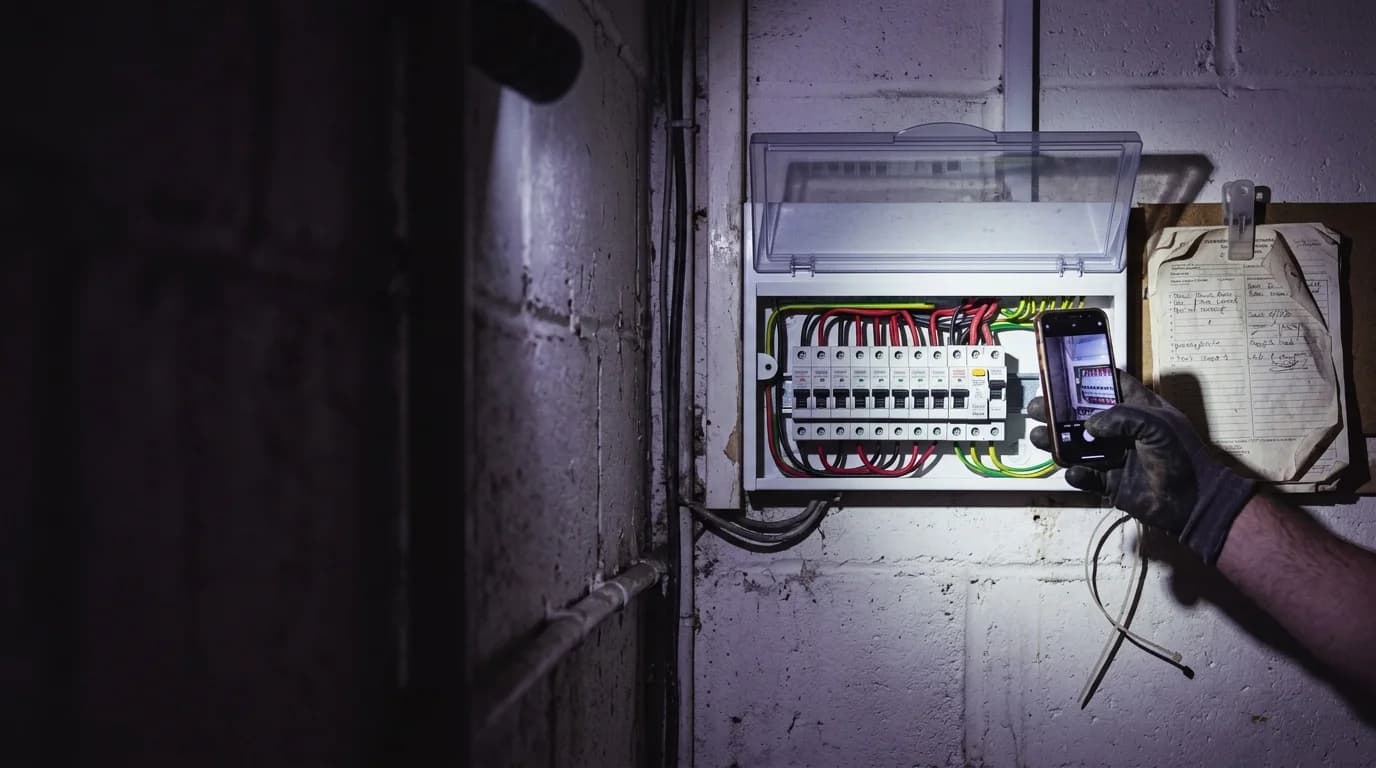
The engineer takes photos on their own phone, often in a basement or plant room with no signal. The photos go into WhatsApp, or nowhere.
Notes are typed up again from memory or a paper sheet. Every re-key is a chance to get a reading, an address or a date wrong.
The certificate arrives as a PDF attached to an email. Someone has to file it against the right property, and the landlord's system has no idea which observations it raised.
A C2 observation needs remedial work, usually within 28 days. The job gets done, but nobody closes the loop, so on paper the danger is still there.
None of these are exotic failures. They are what happens when a safety process runs on phones, inboxes and goodwill.
What good evidence actually looks like
- Photos in a chat app on the engineer's own phone
- Readings typed up again back at the office
- Certificates as PDFs in an inbox
- "Flat 3" in a free text box
- Remedials marked done with no proof
- A week of spreadsheet work to answer the regulator
- Captured once on site, straight into the system of record
- Works offline in a basement with no signal
- Every photo, reading and sign off timestamped and attributed
- Tied to the exact home, block or communal area
- Every C1 and C2 tracked to closure with its own evidence
- "Which homes lack a current EICR?" answered in seconds
The output should be a signed, audit ready certificate with the whole trail behind it. That is the difference between saying you are compliant and being able to prove it.
Four things to do before 30 November
You do not need new software to start. You need to know where you stand.
List every home and communal area with its last EICR date and outcome. The blanks are your risk.
If the honest answer involves WhatsApp or re-typing, that is where your data goes wrong.
Pull every open C1 and C2 and confirm each one is closed with evidence, not just a note saying done.
Work out who receives a hazard report, who triages it and how the time is recorded. Phase 2 makes this an electrical problem, not just a damp one.
Why I care about this
I build software for a living, mostly websites, apps and SaaS systems for small businesses. Compliance is different. When the data is wrong, the cost is not a lost sale. It is a family living with a dangerous electrical installation that everyone thought had been dealt with.
That is why Tutaris exists, and why I think the next few years of housing compliance will be won by the organisations that treat evidence as a product rather than a filing job.
A note on the law
I am a software builder, not a lawyer. For the detail on your own obligations, read the government's Awaab's Law guidance for social landlords and the electrical safety standards guidance, and take proper legal advice.